Choosing your Rotorua evening
Te Pō vs Te Pā Tū vs Mitai: which to book
How Te Pō at Te Puia differs from Te Pā Tū and Mitai, what each evening includes, how the Te Pō Combo and Mārama fit in, and how booking works.
See Te Pō tickets on GetYourGuide ↗Quick answer
Book Te Pō if you want a performance in a carved meeting house, a walk to Pōhutu Geyser and a hāngī buffet in one evening of about two and a half hours at Te Puia. Choose Te Pā Tū for a forest setting and a longer night with return transport from central Rotorua. Choose Mitai for a waka on a stream and a glow-worm walk. Booked through GetYourGuide, Te Pō has free cancellation up to 24 hours before.
Three Rotorua evenings
| Te Pō | Te Pā Tū | Mitai | |
|---|---|---|---|
| Setting | Geothermal valley | Tawa forest | Village and bush |
| Length | About 2.5 hours | About 4 hours | About 3 hours |
| Signature | Walk to Pōhutu | Forest amphitheatre | Waka and glow-worms |
| Meal | Hāngī buffet | Seasonal feast | Hāngī buffet |
What Te Pō is
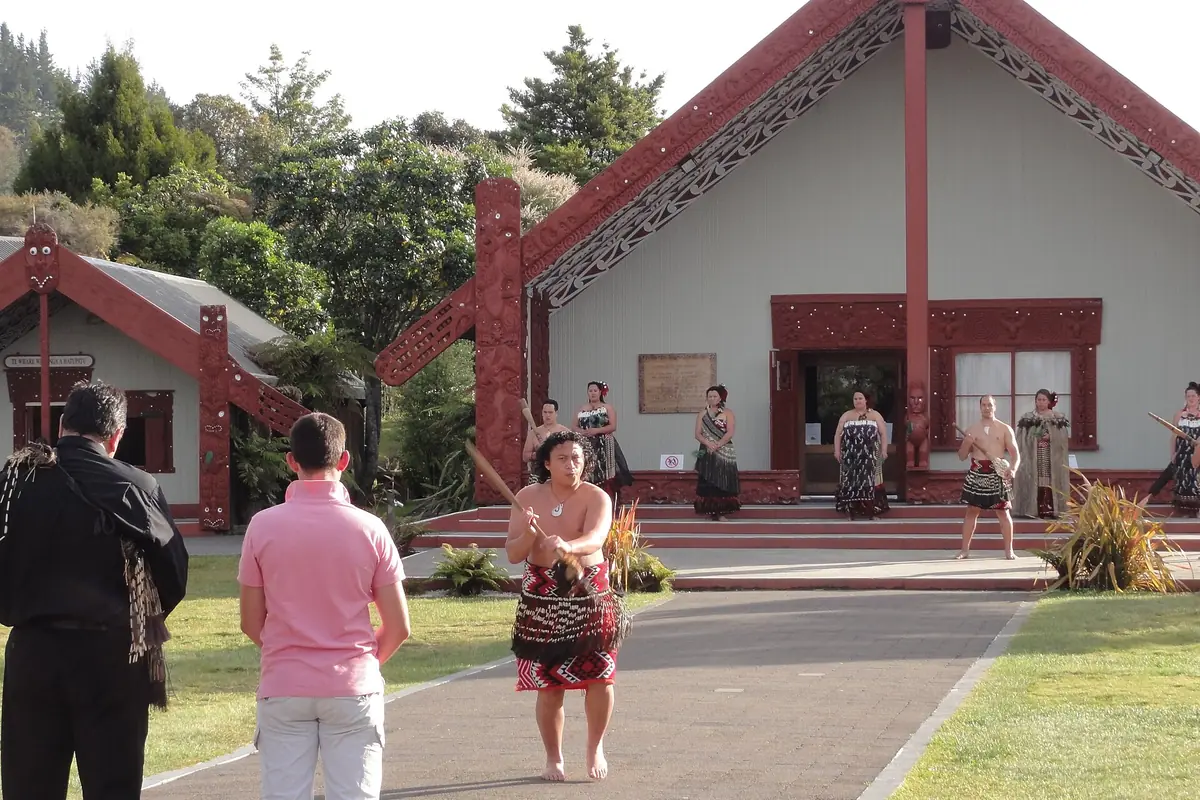
Te Pō is Te Puia's evening in the Whakarewarewa geothermal valley, on the edge of Rotorua. It runs about two and a half hours and has three parts. First comes a performance in the carved meeting house Te Aronui a Rua: a pōhiri (ceremonial welcome), waiata (song), mōteatea (chant), poi and haka. Then you stroll down to Pōhutu Geyser with hot chocolate. Last comes a hāngī buffet dinner at Pātaka Kai Restaurant & Bar, which overlooks the valley. The booking includes entry to Te Puia. You check in at Reception, and your host speaks English.
The ways to spend a night at Te Puia
Te Puia sells more than one evening, so check which one you are booking. Te Pō is the performance, the geyser walk and dinner. The Te Pō Combo is a separate booking that starts with a guided tour. Mārama is a different kind of night: a hosted walk through the lit valley, with no performance. Dinner and Mārama pairs the buffet with that walk.
- Te Pō: performance, geyser walk with hot chocolate, then dinner
- Te Pō Combo: guided tour of about 90 minutes, then dinner, performance and hot chocolate at the geyser terrace
- Mārama: Geyser Light Trail, a hosted walk of about 1.5 km
- Dinner and Mārama: the buffet, then the light trail
Te Pō or the Te Pō Combo?
Choose Te Pō if one evening is what you have. It starts with the performance, so you arrive, watch, walk and eat, and the booking runs about two and a half hours. Choose the Combo if you also want a guided tour of the valley in the afternoon. Te Puia describes the Combo as its most popular night option. The order differs: on the Combo, dinner comes before the performance and the hot chocolate at the geyser terrace ends the evening. Start times differ too, so read the booking calendar for the option you pick.
The hāngī and dietary needs
Te Puia describes a hāngī as a traditional Māori method of cooking using heated stones buried beneath the earth, with the food steamed slowly until tender. At Te Puia it is served as a buffet at Pātaka Kai, and the restaurant labels dishes as gluten free, dairy free, vegan or vegetarian. The Te Pō booking says vegetarian and gluten-free options are available for dinner and asks you to state any dietary needs when you book, so do that at booking rather than at the table.
Te Pā Tū in brief
Te Pā Tū is a separate evening run by a different operator, set in Tawa forest. Its own site describes about four hours of celebration and feasting: a haka pōhiri (cultural welcome) on arrival, kapa haka in a forest-formed amphitheatre called Tūāpapa, and a feast in a dining space. Return transport from central Rotorua is listed. The programme follows the seasons, with a summer harvest celebration and a winter Matariki celebration. The business is owned and operated by Tauhara North Trust. Pick it for a forest setting and a longer night.
Mitai in brief
Mitai Māori Village is family owned and operated. Its site lists a waka (canoe) paddled down the Wai-o-whiro stream, songs, dances and a haka, preparation of food in a hāngī pit, a guided walk through native bush to see glowworms, and a hāngī dinner. The whole evening is given as about three hours, with the performance and buffet presented indoors. Pick it if the waka and the bush walk appeal most. Its site does not cover transport, so ask about pickup before you book.
How to choose
All three pair a Māori performance with a meal, and none is a copy of another: they are run by different operators, on different grounds, with different closing scenes. Match the night to what you most want to remember rather than to a ranking. This site is built around Te Pō and earns a commission on bookings made through its links, so weigh the comparison with that in mind.
- A working geothermal valley and a geyser: Te Pō
- A forest setting and a longer night: Te Pā Tū
- A waka and a glow-worm walk: Mitai
- A guided look at the valley in daylight first: the Te Pō Combo
Read next: Pōhutu geyser at night: what to expect
Booking here or with Te Puia
Te Puia sells Te Pō and the Combo on its own site, and you can book Te Pō through GetYourGuide from this page. The terms differ. Booked through GetYourGuide, Te Pō has free cancellation up to 24 hours before and a reserve now, pay later option. Te Puia's own terms make bookings refundable if cancelled more than 48 hours ahead (72 for groups), with changes made by phone or email. Te Puia asks you to check in 15 minutes before your time and says a late arrival can forfeit the ticket.
Dates, start times and the calendar
This guide gives no start time, because the sources differ and Te Puia's own pages mention more than one dinner sitting. The booking calendar shows the start time for each date, and your confirmation repeats it. Pick the date first, then plan the rest of your day around the time shown. If your plans are still loose, reserve now and pay later holds your spot without paying today. Check what your date's booking says about drinks before you rely on it.
Respect on the night
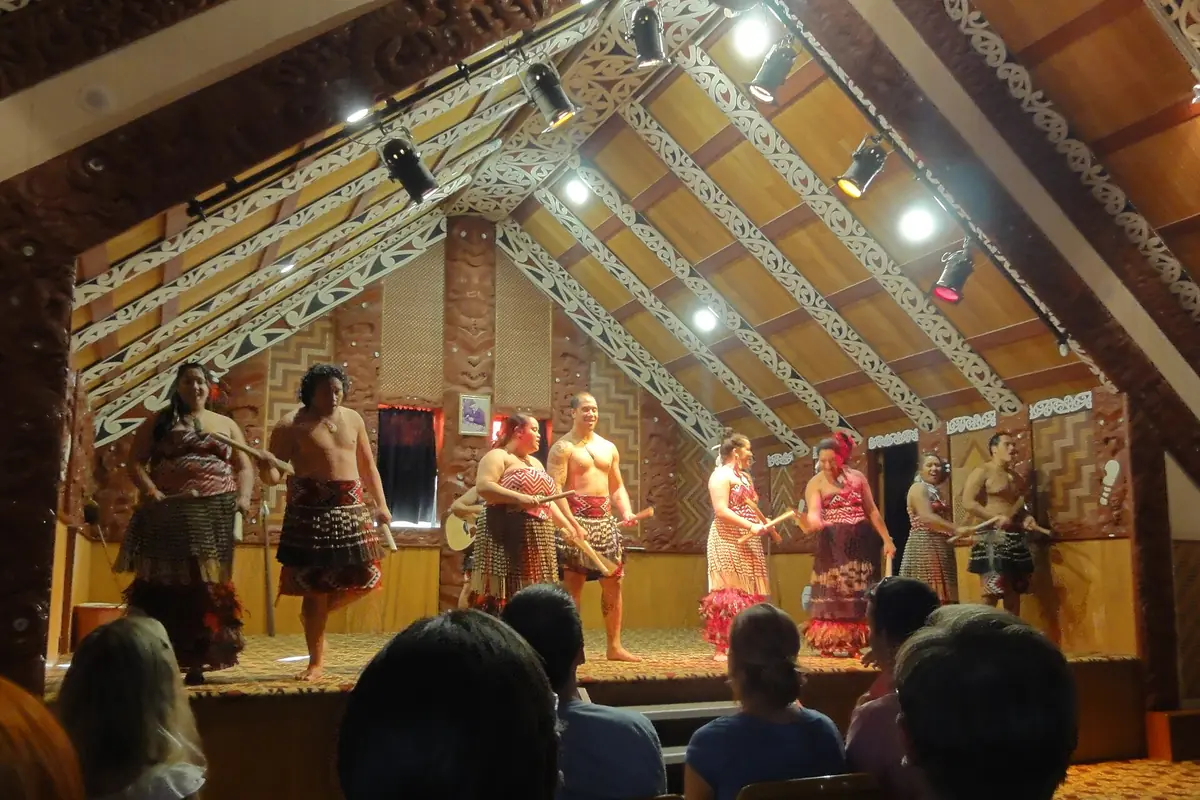
A pōhiri is a formal welcome. Traditionally it let the people of the land learn the intentions of their visitors. Haka is not only a war dance: it is performed to welcome guests and to mark achievements and occasions, and Māori scholars consider the idea that haka are typically war dances to be mistaken. Song poetry in kapa haka is in Māori, so you follow much of it by sight and through your host's English. Te Puia's published terms set no filming rules, so follow your host's instructions about photographs.
Who this isn't for
If you want a daytime visit, book a day tour: Te Pō is an evening. If you want hotel pickup built in, Te Pā Tū lists return transport and this Te Pō booking does not. If you want to wander the valley at your own pace, Mārama is a hosted walk you take as you like. If you need the night to fit a fixed clock time, check the calendar before booking anything else that evening.
Frequently asked questions
What happens at Te Pō, in order?
A performance in the carved meeting house Te Aronui a Rua, then a walk to Pōhutu Geyser with hot chocolate, then a hāngī buffet dinner. The evening runs about two and a half hours.
How is Te Pō different from Te Pā Tū and Mitai?
Te Pō is set in Te Puia's geothermal valley and includes a geyser walk. Te Pā Tū is in a Tawa forest and runs about four hours. Mitai adds a waka and a glow-worm walk over about three hours.
Is the Te Pō Combo the same booking?
No. The Combo is a separate booking. It adds a guided tour of about 90 minutes first, then dinner, the performance and hot chocolate at the geyser terrace.
Can I cancel Te Pō?
Booked through GetYourGuide, cancellation is free up to 24 hours before, with a full refund. Booked directly with Te Puia, its own terms apply: refundable if cancelled more than 48 hours ahead.
Is hotel pickup included?
This booking lists no hotel pickup. You check in at Reception. Te Pā Tū lists return transport from central Rotorua. For Mitai, ask the operator.
Is Te Pō suitable for children?
The booking is suitable for all ages, and infants under 4 can enter for free. The evening runs about two and a half hours, so think about bedtimes.
Sources